

In South Africa, the entrepreneurial spirit is alive and well. Small businesses and startups play a critical role in economic growth, job creation, and innovation. However, many South African entrepreneurs operate informally, which can limit growth and lead to unforeseen challenges. Formalizing your business in South Africa is an essential step to unlocking greater potential, accessing resources, and establishing credibility in the marketplace.
Key Benefits of Formalizing Your Business in South Africa
1. Unlocking Financial Access
One of the biggest challenges for small business owners in South Africa is accessing finance. Informal businesses may find it challenging to secure loans, as banks and other financial institutions require formal registration and financial documentation. Formalizing your business gives you access to funding options, from bank loans to government grants and private investments. This funding is vital for expanding operations, purchasing equipment, or covering essential business expenses.
2. Building Credibility and Trust
A registered, formal business instills confidence among clients, suppliers, and potential investors. For many South Africans, a formal business status signals professionalism, accountability, and long-term commitment. Clients, especially corporate clients, are more likely to engage with businesses that have formal structures in place. This credibility can also lead to more referrals, partnerships, and opportunities for growth.
3. Benefiting from Tax Deductions and Incentives
Though taxes may seem like an added burden, formalizing your business opens the door to tax deductions and government incentives designed specifically for SMEs in South Africa. Registered businesses can benefit from deductions on business expenses, such as rent, utilities, and office supplies. Additionally, the South African government offers tax incentives and assistance for registered businesses, helping to ease some of the financial strain associated with running a business.
4. Legal Protection and Security
Operating informally can expose your business to various risks, such as intellectual property theft, contract disputes, and liability issues. By registering your business, you establish a legal entity that separates personal assets from business liabilities, reducing personal risk. Furthermore, registered businesses have greater protection over intellectual property, such as trademarks and patents, which are essential for building a unique brand and maintaining a competitive edge.
5. Accessing New Markets and Government Contracts
Formalization enables small businesses to bid for government contracts and work with larger corporations that require formal business status. The South African government often allocates a portion of its procurement budget specifically for small, black-owned, and local businesses, providing ample opportunities for growth. A registered business is also better positioned to explore export opportunities, helping South African entrepreneurs tap into international markets.
6. Strengthening Business Management and Planning
Finally, formalizing your business encourages the adoption of structured business practices, such as regular financial reporting, strategic planning, and performance tracking. Formalization often requires the establishment of a clear business plan, which can serve as a roadmap for growth. With a formal structure, you can more effectively track progress, make data-driven decisions, and adjust strategies to meet evolving market demands.
How to Formalize Your Business in South Africa with Venter Consulting
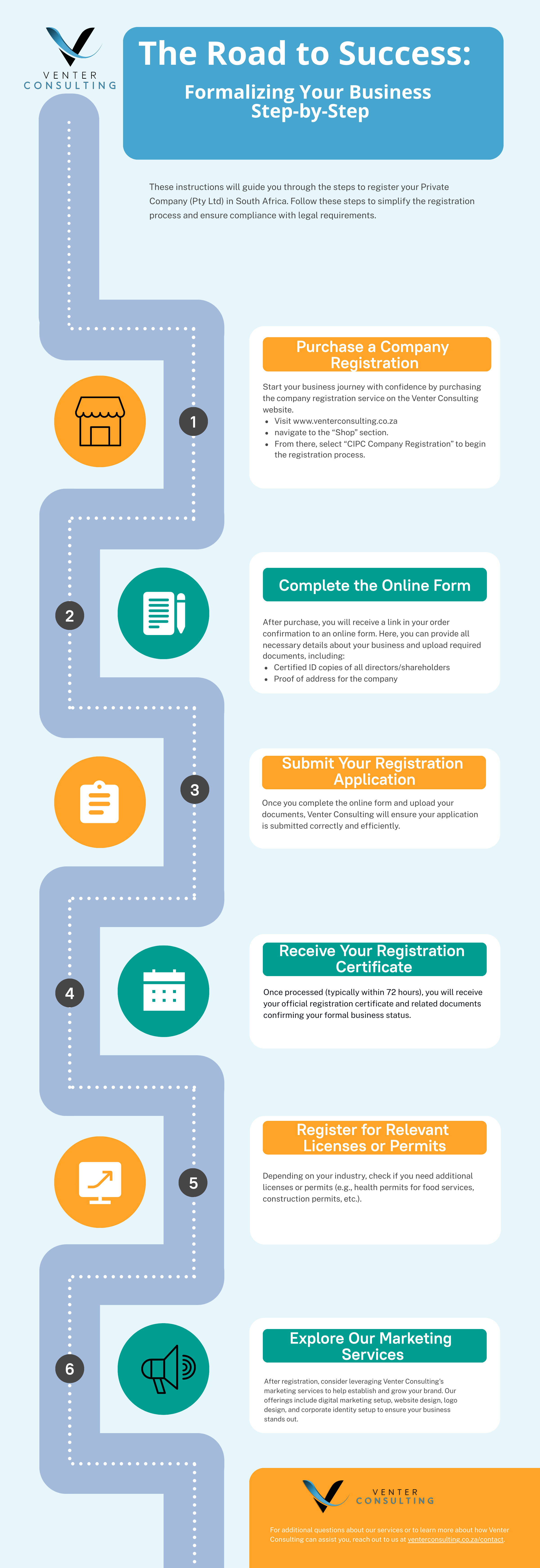
The process of formalizing your business may feel complex, but with Venter Consulting’s comprehensive registration service, setting up your business can be efficient and straightforward. Here’s how we simplify the process for you:
- Official CIPC Company Registration: We handle the entire registration process with the Companies and Intellectual Property Commission (CIPC), ensuring that your company is legally recognized.
- Company Name Reservation: We secure your desired business name, establishing your brand identity from the outset.
- BBBEE Certificate: A BEE certificate is included as part of our service, positioning your business for compliance and broader market access.
- Share Certificates: We issue all share certificates, ensuring ownership documentation is complete and compliant.
- Tax Registration: Venter Consulting manages your tax registration with SARS, setting your business up for full tax compliance.
- UIF Registration: Our service includes UIF registration, meeting employee-related requirements from the outset.
Our registration process takes just 72 hours from the time we receive all necessary documents and information, including certified ID copies of directors/shareholders and a proof of address for the registered company address. Once payment is processed, we provide a link where you can securely submit all the information needed to start your formal business journey.
To learn more or to register your company today, visit Venter Consulting’s Company Registration Service.
Essential Steps for Business Readiness After Registration
Once your company is registered, there are essential steps to ensure your business is fully compliant and operational:
1. Register for Relevant Industry-Specific Licenses or Permits
Some industries require additional licensing or permits. For example:
- Food Services: If your business involves selling food or beverages, you may need a health permit from your local municipality.
- Construction: Contractors often need to register with the Construction Industry Development Board (CIDB).
- Liquor Industry: You must apply for a liquor license to sell alcoholic beverages.
Check with local authorities or industry bodies to ensure you have all necessary permits and licenses.
2. Open a Business Bank Account
Keeping personal and business finances separate is crucial for tax and legal reasons. Opening a dedicated business bank account:
- Helps with accounting and financial management.
- Adds a layer of professionalism and credibility.
- Simplifies tax calculations and business expense tracking.
3. Get Business Insurance
Business insurance isn’t legally required in South Africa, but it can protect your assets and offer peace of mind. Consider insuring against risks such as:
- Property damage
- Liability for injuries or damages
- Employee-related risks, if applicable
4. Utilize Marketing Services
To grow your business and establish your brand in the marketplace, consider leveraging Venter Consulting's marketing services. Our digital marketing solutions can help you enhance your online presence, reach your target audience, and drive sales. From website design to social media management, we offer tailored marketing strategies to boost your business’s visibility and credibility.
Essential Steps for Formalizing Your Business in South Africa
- Navigating Compliance: Staying compliant with tax and regulatory requirements can be challenging. Consulting with a business advisor or accountant may be worthwhile for staying on track.
- Budgeting for Formalization Costs: Factor in fees for registration, permits, and ongoing costs, including professional services if necessary.
- Building a Paper Trail: Document all transactions and communications related to your business. A clear paper trail is invaluable for legal protection, tax calculations, and performance analysis.
Final Thoughts
Formalizing your business may seem daunting, but the benefits it brings far outweigh the initial effort. From financial access and legal protection to credibility and access to new markets, formalizing a business empowers South African entrepreneurs to build sustainable, competitive, and profitable enterprises. By choosing Venter Consulting’s company registration service, you can navigate the formalization process with ease, knowing that each essential element is handled professionally.
Start your business journey with confidence – contact Venter Consulting today for a streamlined registration experience.